 Neighborhood Sun

2024 Impact Report: Serving Communities With Solar Savings
Edit$4 Million in Solar Savings for People of All Income Levels
Through community solar, we are proud to pass on savings in the form of solar credits to households of all income levels that deserve a bit of relief from rising energy costs. In 2024, we partnered with an affordable housing nonprofit to offer record-high savings for our low-income subscribers while also managing the largest rooftop community solar project in the United States.
Neighborhood Sun is on a mission to make clean, affordable energy accessible to all—not just the select few.
Neighborhood Sun was built upon the principle of using business as a force for good to accelerate the clean energy transition while ensuring it's both equitable and accessible.
“If we’re going to get everyone on board, business is the way to do it. And if we’re going to get businesses on board, we need to lead by example.”—Gary Skulnik, Founder and CEO
That's why we were incorporated as a Public Benefit Corporation in Maryland and Certified as a B Corporation by B Lab from inception. B Corps have to recertify every 3 years, and we successfully recertified early this year.



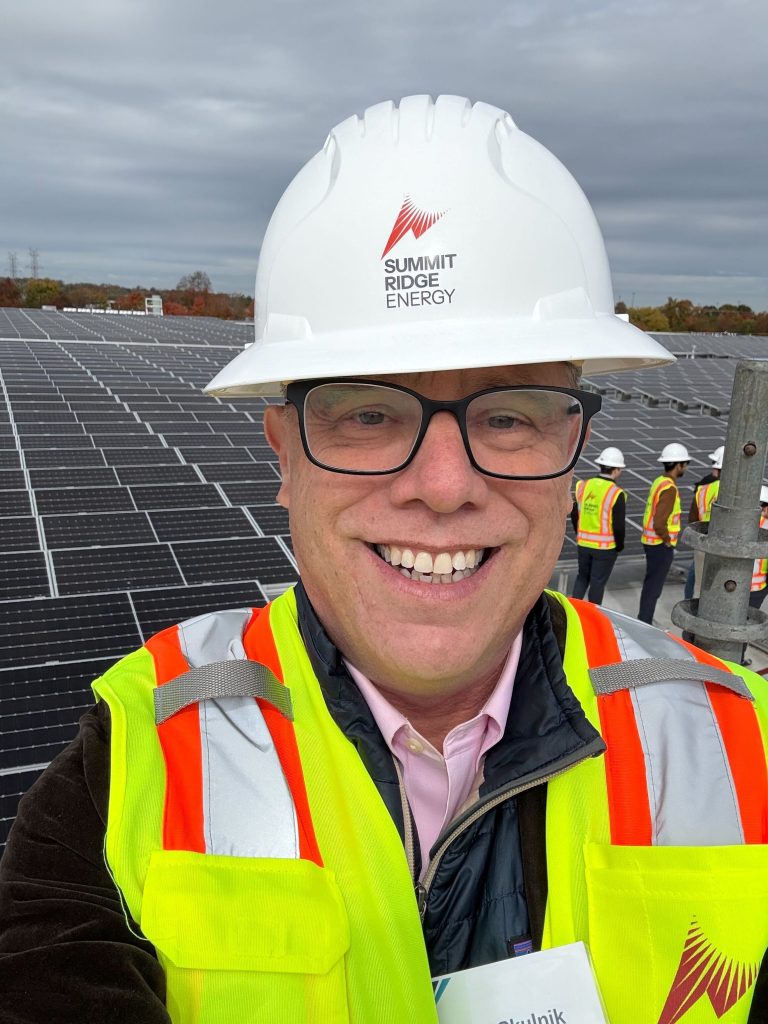
Letter from Our CEO
Despite the uncertainty that came with this new administration, the community solar segment had its largest-ever year of capacity, with solar accounting for two-thirds of all new electricity-generating capacity in 2024. Community solar adoption and awareness continued to grow at a time when households are struggling to keep up with rising energy costs. Climate change is already affecting all of us, especially the most vulnerable populations who have contributed the least. Community solar is a rare opportunity to equalize the playing field, allowing anyone and everyone to participate in their community’s transition away from fossil fuels to renewables.
In 2024, Neighborhood Sun signed two licensing deals for our SunEngine™ platform, raised more than $2 million through a community fundraising round supported by community solar subscribers and investors alike, and we gave SunEngine™ a major glow-up with AI tools that helped us boost productivity, improve sales performance, and better support our partners and subscribers. Financially, we tightened our belts without losing our stride. We cut expenses, increased revenue, reduced losses, and even hit cash-flow positive for the last six months of the year.
And the impact? Oh, it’s real. In 2024 alone, our subscribers saved more than $4 million, and the community solar farms we manage prevented 202,395 metric tons of CO₂ from entering the atmosphere. Add in our innovative low-income partnerships with Johns Hopkins University and Enterprise Community Development, and you’ve got a year that made a measurable difference where it counts. We forged new partnerships and adapted our marketing materials to appeal to more Spanish-speaking households. Although we’re proud to be managing the largest rooftop community solar project in the United States, it’s our low- and moderate-income projects that the entire team feels most passionate about. The work isn’t always easy—but it is meaningful, measurable, and genuinely enjoyable to work with such a kind-hearted and passionate team and feel the support of our incredible community of clean energy advocates.
Here’s to building a cleaner, more equitable energy future—one subscriber, one solar farm, and one community at a time.
Cheers to another year of clean, affordable, and accessible energy!
Annual Highlights
Addressing Energy Equity & Building out SunEngine
Low- & Moderate-Income Subscribers
We do everything we can to remove barriers that prevent low- and moderate-income (LMI) households from accessing solar energy, but we recognize that some obstacles are outside of our control. In certain states, rules require customers to pay a separate bill to Neighborhood Sun and keep a payment method on file. Income verification rules also vary widely by state and can be difficult, sometimes requiring documents like a W-2. Some projects also have credit score requirements that not all LMI households can meet. Despite these challenges, we find ways to support our LMI subscribers. We offer payment plans, simplify sign-up, provide Spanish-language materials, advocate for better policies, and ensure income-qualified customers receive higher discounts when available. In 2024, 31% of total subscriber savings went to LMI households and organizations, and we updated our Equitable Solar webpage with state-specific income qualification resources.
2024 LMI Impact
-
2,617 LMI subscribers invoiced
-
$1.3 million saved by LMI subscribers
-
34.8 million kWh of clean energy added to the grid
-
24,680 metric tons of CO₂ emissions avoided
SunEngine™ Community Solar Software
Neighborhood Sun is a customer acquisition and management company for community solar projects. Early on in the company’s development, we sought out a community solar management platform that would enable us to do everything we needed to in order to provide the best service both to our subscribers and the developers we work with. When we couldn’t find one that met all of our needs, our tech team set out to develop our own, led by our CTO, John Wilson. After years of building out SunEngine™ with weekly software updates based on our team’s direct experience using the platform, we are now able to license it out to other solar developers and asset owners. Through this platform, we deliver on all aspects of the customer acquisition and management processes for community solar project/asset owners. Today, in addition to our own team, hundreds of active field agents are using the platform at any given time across 12 states.
SunEngine™ Features
-
Consolidate customer acquisition and management
-
Customize enrollment and back-end features
-
Use a secure, fully separate platform
-
Make sign-up easier, lowering sales costs and improving customer retention
We’ve had trouble-free service with Neighborhood Sun for more than five years. It’s a no-brainer. They offer discounted rates on electricity and it’s friendlier to the environment. Why pay standard rates through your utility when you can get a continuous discount through Neighborhood Sun?
— Jay, Community Solar Subscriber Since 2019
Impact on Serving Low-Income Households
Community solar plays an essential role in making clean energy accessible to the majority of Americans who cannot install their own rooftop panels. Low-income households spend about 6% of their income on energy, which is 3x more than other households. To help lower these costs, income-qualified subscribers can receive larger savings, with discounts ranging from 20% to 50%, depending on the project and location. In some states, community solar projects are required to set aside part of their energy for income-qualified households. This helps ensure that lower-income families can benefit from local solar power, especially since installing rooftop solar is often not possible for them. We continue advocating to developers to set the highest discount possible for our lower-income subscribers.

Impact on Empowering our People
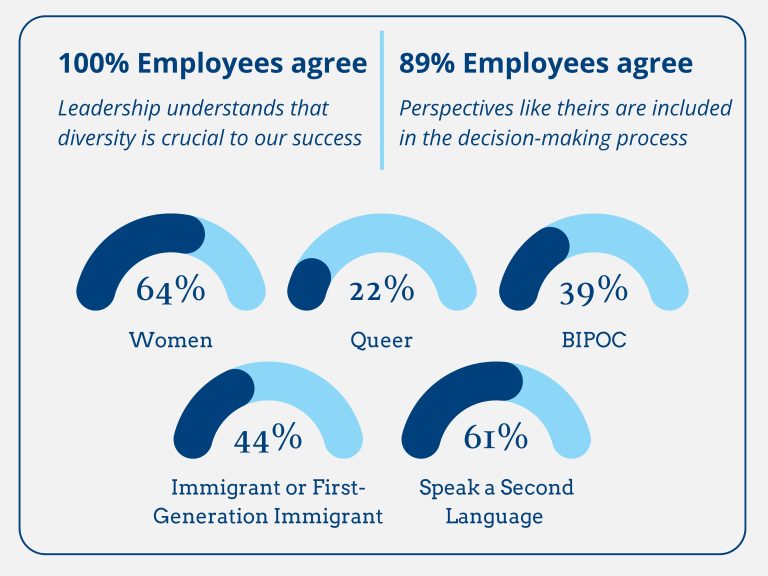
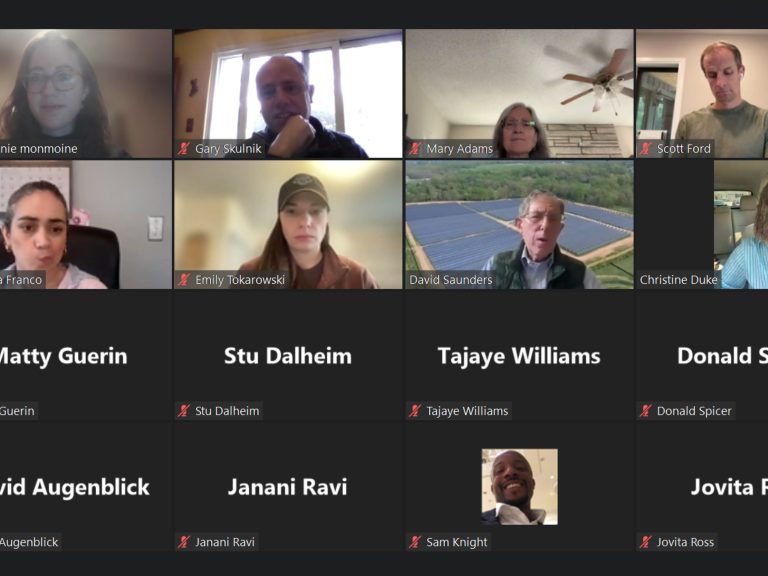
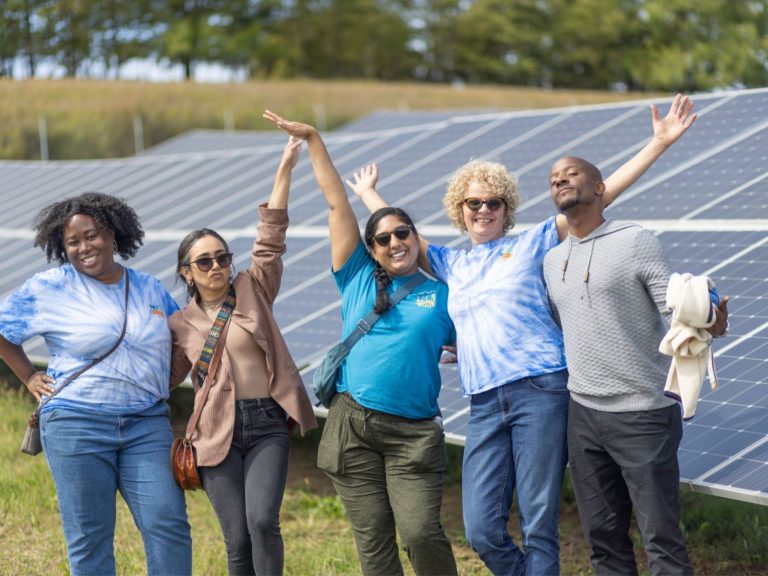
We are a small yet mighty team of people hellbent on making clean energy accessible and affordable while offering the best possible customer service and experince. Through community solar, we are able to offer equitable access and guaranteed savings, ensuring that the economic benefits of solar are redistributed into the communities that make it all possible, rather than going up the ladder in big energy corporations. If you look deep enough, every environmental issue is really a people issue. To remind us of that, we have brand values that center humanity in every decision and interaction as we work to address the climate crisis.
- Use Business as a Force for Good
- Don't be Afraid to Fail Forward
- Create More Community, not More Consumers
- Empower people by protecting the planet
- Remember, we're all in this together

Impact on Showing up for our Community
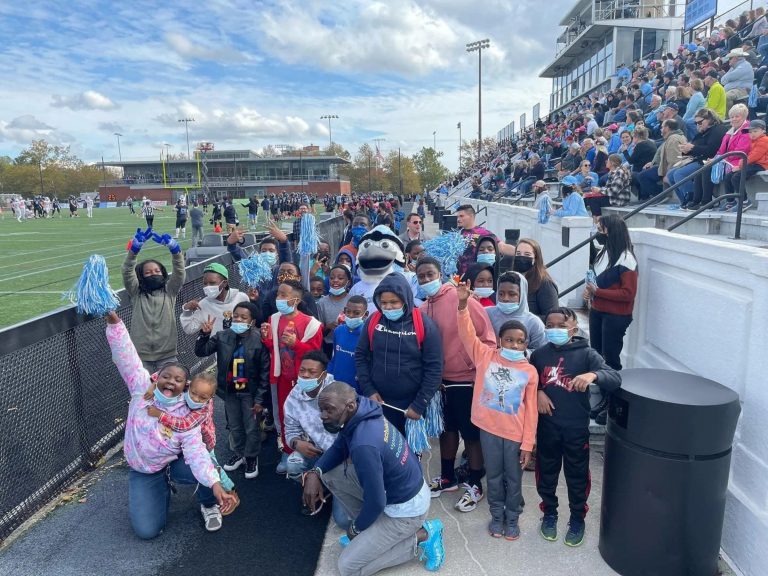
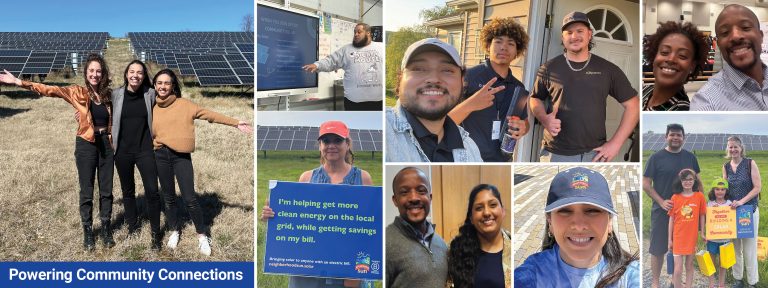
There can be no community solar without the essential contributions from each and every stakeholder in our community. Our team is the connecting point between (1) the solar developers who own the projects, (2) residents and businesses local to those projects who want access to solar and savings, (3) utilities that issue the solar credits, and (4) the organizations we partner with in the communities we serve who help educate people about community solar. In 2024, we donated $23,892 to community partners who helped us build trust and get the word out. We are proud to partner with incredible organizations that share our values.



Goals
Since Neighborhood Sun manages projects rather than owning them, we are, unfortunately, not able to dictate things like the sourcing or recycling of panels, farm site locations, discount rates, project timelines etc. Despite recognizing these limitations, it’s a priority for us as a company to deliver on sustainable and ethical practices for our subscribers, partners, and team. In 2025, we will continue:
- Increasing the portion of LMI subscribers we serve by addressing barriers and expanding access
- Improving our efficiency and automations to reduce the waiting time for subscribers seeking support
- Reducing the use of third-party sales organizations so we can maintain the highest level of customer care
- Exploring opportunities to advocate for responsible sourcing and end-of-life practices for solar panels
Public Benefits and Disclosures
This Impact Report offers evidence of the work Neighborhood Sun has done in 2024 to generate benefits for the public, both in the form of benefitting individuals and the environment simultaneously through our daily business activities. As a Public Benefit Corporation registered in Maryland, Neighborhood Sun is legally bound to use our business for the creation of general public benefit, defined as “a material, positive impact on society and the environment, as measured by a third–party standard, through activities that promote a combination of specific public benefits,” which include the following:
- Providing individuals or communities with beneficial products or services
- Promoting economic opportunity for individuals or communities beyond the creation of jobs in the normal course of business
- Preserving the environment
- Improving human health
- Promoting the arts, sciences, or advancement of knowledge
- Increasing the flow of capital to entities with a public benefit purpose
- The accomplishment of any other particular benefit for society or the environment